Food & Nutrition Made Simple
Healthy eating advice can feel like a moving target — serving sizes, labels, “good” foods, “bad” foods… it’s a lot.
That’s why The Shared Lunchbox does the thinking for you.
We simplify food choices for you using:
- ✅ The Victorian Government Healthy Choices Guidelines traffic light system
- ✅ The 5 Food Groups based on the Australian Dietary Guidelines
So you can feel confident about what you’re eating.
the traffic light system made easy
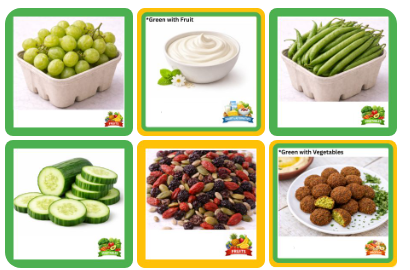
Every item is shown with the Victorian Government’s Healthy Choices “traffic light” system, so it’s easy to understand at a glance. These are displayed as a colour around the menu item.
We also believe real life needs flexibility. Most of what we deliver is fresh, whole food — but we include a variety of options because:
- not everything needs to be “perfect” to be healthy
- balance matters
- and how foods are combined can change the overall value of a meal
Example: a ham sandwich might be classed as a ‘red’ choice on its own — but add extra salad vegetables and it can shift to an ‘amber’ choice by improving the overall balance.
The traffic light system consists of the following colours.
🟢 GREEN — Best Choices
GREEN foods and drinks are the healthiest options. They’re generally:
- lower in saturated fat, added sugar and salt
- lower in kilojoules
- higher in fibre
- rich in important nutrients
Even within GREEN, some options are “better greens”. For example, wholegrain bread and white bread may both be GREEN — but wholegrain is higher in fibre.
🟠 AMBER — Choose Carefully
AMBER items can still provide good nutrients, but they may be:
- higher in kilojoules
- higher in saturated fat, added sugar and/or salt
AMBER foods are best enjoyed in moderation and shouldn’t dominate the lunchbox.
🔴 RED — Limit
RED choices aren’t essential and should be limited. They’re generally:
- high in kilojoules
- high in saturated fat, added sugar and/or salt
- lower in important nutrients (like fibre)
RED foods can still have a place — just rarely and in small amounts, as part of a balanced diet.
For more information, visit the Department of Health and Healthy Eating Advisory Service.
The 5 food groups
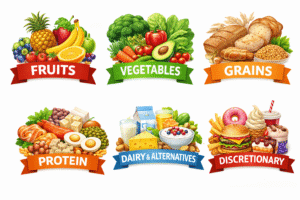
We classify items into the 5 food groups, so you can easily track what you have each day. These are listed on the menu item by the food group symbol. For information on what serve sizes you need each day (based on age, gender, weight and life stage) you can check on Eat For Health Nutritional Calculator.
✅ Food Groups We Use
- Grains (mostly wholegrain / high fibre)
- Vegetables
- Protein (lean meats, eggs, legumes, tofu, nuts/seeds)
- Dairy (and calcium-fortified alternatives)
- Fruit
important information
The nutritional information provided on this website is for general information and educational purposes only. It is based on publicly available guidelines, including the Victorian Government Healthy Choices Guidelines and the Australian Dietary Guidelines.
The Shared Lunchbox does not provide medical, nutritional, or dietary advice and is not a health practitioner. Information provided is not intended to replace advice from a qualified health professional.
Individual nutritional needs vary. If you or your child have specific dietary requirements, allergies, medical conditions, or concerns, we recommend seeking advice from a qualified health professional before making dietary changes.